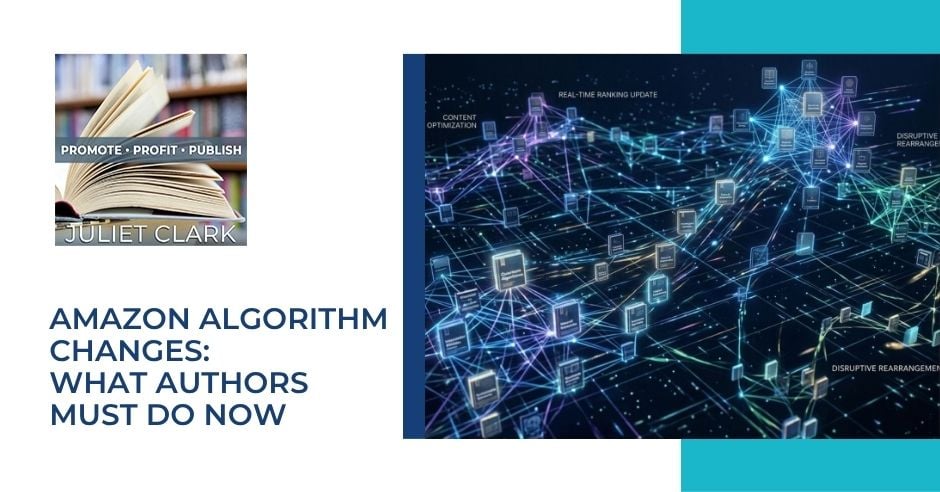
May 2026 saw some major algorithm changes at Amazon, and authors have to make some changes if they want to keep up and avoid having a tough time. Juliet Clark breaks down how the online shopping giant is moving away from bestselling campaigns and more into organic engagement and online traffic. Learn different strategies to work around the ever-changing algorithm and internet trends instead of simply buying a bunch of ads or hitting a list.
—
Watch the episode here
Listen to the podcast here
Amazon Algorithm Changes: What Authors Must Do Now
In May 2026, we are going to be talking about the changes at Amazon. If you are still treating your Amazon visibility the way you were before, chances are you’re thudding. You’re just dropping. These changes were made to be more organic and also bring in external sources to buy books. If your strategy has been to launch hard, have that bestseller campaign, buy a bunch of ads, hit a list, and then hope. You’re going to have a tough time.
Amazon’s A10 Search And Recommendation System
The algorithm changes are probably a big wake-up call. The version that Amazon rolled out in January 2026 is its A10 search and recommendation system. It’s completely changed what gets rewarded on the platform. If you tuned into our episode where Adanna Moriarty talked a little bit about this, you learned that many of us who have created new platforms in 2025 have done this with this in mind.
Having that bestseller campaign, I wouldn’t even pay for one now. I don’t even offer them anymore. What happens is there’s a graph where you get that big spike, and then it drops off. That is not what Amazon is rewarding anymore. They want to see consistent sales across the board. They want to see those sales come from external sources, meaning not their ads, and not places where some of the scams have been going on. We’re going to talk about that a little bit.
In the old A9 era, they favored sales philosophy, internal behavior, who sold the fastest, who bid the most on ads, and who could stack a launch day with promos. That’s why the bestseller campaign was so successful, because we could take that pre-sale. We could jam a bunch of sales in there and get that bestseller sticker. If you haven’t noticed, I haven’t put a bestseller sticker on a book in probably two years because Amazon would no longer let you have it. It’s because so many people were putting it in their books without achieving the standard. Even if you did, they wouldn’t let you put it on.
What changed on this was that Amazon noticed that there was a big thud. You would have book sales for that pre-sale. You would go into maybe 2 or 3 weeks of your new launch, and then it would bottom out. You dropped from wherever you were in your category in the top ten to probably back onto the back pages, where people couldn’t find you.
What they changed in 2026 benefits your platform building. If you’re still out there thinking that you’re going to not build a platform and pray that your book does well. You’re going to have a bigger surprise than you did, even before all of this happened. What they’re looking for is organic engagement that outranks a pure ad spin. They’re looking for what your content looks like.
Here’s something that most people don’t know about Amazon that tell this to all my clients. They’re blown away. Amazon is Big Brother. It has been for a very long time. Back in 2010, there was a scam going around where authors would open up multiple Gmail and Hotmail accounts. They would write their own reviews. It would look like they were coming from a legitimate source. There was that, and then there was the Fiverr scam.
It’s Upwork now, but it wasn’t Upwork then. There was another platform where you could go over, and you could buy reviews for your books, because reviews were part of the algorithm that played with it. The result was that people were reviewing books that they’d never read. They’d never bought. It wasn’t helping authors, other than to have a review there. You probably saw, over time, that Amazon broke that into verified reviews.
If it had nothing next to it, it wasn’t a verified review, which meant that the book wasn’t bought on the platform. They went back. They not only threatened to sue Fiverr to take these vendors down, but they also created a system where the reviews are sound now. You don’t get a bunch of fake reviews. My point of all that is that there are little spiders that go out to Amazon. They’ve always had them. That’s how they run their KDP free program. When you’re enrolled in that free program, you can’t have your book for sale anywhere else.
They will put those little feelers out, come back to you, and say, “You can’t run this program because you have a book on a website.” They don’t exactly tell you where it’s at, but it may be at Barnes & Noble, if you’re through Ingram. It may be on your website, but you can’t sell it anywhere else. They’ve had these spiders out there for a long time. They know exactly where the people are coming from, who are writing your reviews.
They also know where your sales are coming from, and that they’re legitimate people on the platform. That organic engagement is coming from the outside. It’s external. Where does that external traffic come from? They’re looking for external traffic from your email. Remember, email was part of your platform. You’re always supposed to be building a list. Your social media. Are you getting them from LinkedIn? Are people going in and buying your books from LinkedIn or Facebook? Wherever that is, they can see where that click comes from.
If you’re a podcast guest, that’s content. Are you producing good content while you’re doing this? If you’re someone who’s been avoiding that author platform, you have no email list, and you’re not producing content on a regular basis, not podcast guesting, or not running your own podcast, or your own blog. You’re going to be in big trouble here because you’re not getting the extra kudos to move you up in the ranking.
All of that is heavily rewarded now. All of that organic stuff that you do around the platform-building piece they are rewarding now. What they’re doing here is Amazon has taken us from a short game as an author to a long game as an author. That’s a good thing because most non-fiction authors have businesses attached. To have that long game also benefits your business. It does hurt fiction authors a little bit because fiction is so much harder. Taking that ad revenue away or those ad clicks might be hurting them a little bit.
Amazon has taken authors from a short game to a long game. Share on XThey’re also looking at author authority and account authority. This is more important than ever. That’s where all of those things I talked about come in. The other part is this, is your platform filled out? Is your Author Central filled out? Is it filled out fully? Is it nice looking? They’re also content quality. The relevance matters more than the keyword stuffing. You probably noticed a lot of changes with Google with the advent of AI.
I have friends who run Google Ads. They’re having a tough time because Google is overriding their keywords and doing some things that are making it harder to get good results from Google Ads these days. It’s going to be the same thing here. They’re no longer looking at the keyword stuffing. They’re looking at what your content looks like and whether it is relevant to your book. Amazon also looks at your book’s performance over time.
What Could Hurt Your Amazon Ranking
It’s no longer just the “You went to number one.” They’re playing the long game here. Are you getting consistent sales every month? Are you having big spikes and then pulling back? What are you doing to do that? Are you out speaking? They’re looking at everything. Here’s a big one. I’m going to tell you the ramifications of this big one and what’s going on out there that could hurt your platform and your Amazon ranking.
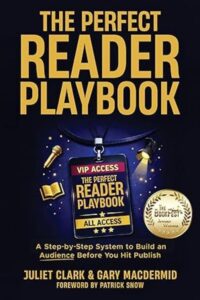
We’ve always thought that reviews are a way to get more traction, and they are, but there’s a difference. Amazon is now tracking buyer behavior. This is a basic marketing tenet that most book people don’t even acknowledge. That’s what I talked about in The Perfect Reader Playbook. We have buyer triggers. We’re looking at the behavior and what makes these people buy.
That’s what big ad firms do. That’s what we should be doing as well as marketing people. It’s that actual marketing, the science of marketing. Are people going in and looking at your book and then going and buying another book? Is it consistently another book? Is it going in and looking at what books are being bought with yours? What are those reviews coming in at? Where are they coming from?
I mentioned that there are verified buyer reviews. Those are people with actual accounts. There are unverified reviews. I’m going to tell you what the AI is looking at. The AI looks at patterns. That’s what it’s looking for. If you go in and look at your verified reviews, more than likely, those are people who have bought other items on Amazon. A long time ago, I did an affiliate link. Somebody bought a book, but they bought a vacuum cleaner at the same time.
Somehow, I got paid for the book and the vacuum cleaner. That’s what they’re looking for. It’s that pattern grid. Are these people buying other things? Are they regular buyers when they review your verified book? If you see an unverified review, this is where the pattern recognition comes in. If you click on that person and all you see are book reviews. You’ve identified someone who paid for those reviews.
There are companies out there that you can pay to do reviews, but they buy the books. There are a lot of book club scams out there where they will sell you Goodreads and Amazon reviews. When you go, it’s unverified because they didn’t buy the book. The other toe on that with the unverified besides not buying the book is the purchase history. Are they just reviewing books? Are they reviewing the same books?
Those are the patterns that Amazon is looking at. They don’t give those unverified reviews the weight that they give the verified reviews. Mainly because they don’t know if you purchased the book. They don’t know where you got it. That’s what’s hurting people in these book club scams. They sound like a great idea, but they’re not. I know we talked about this in the February training.
For those of you who didn’t come, this may be the first time you’re reading it. We talked about not only contracts and the different things you needed to be doing, but also the big scams that were out there. The book club was one of them. You have to be careful now when you put all this together. The importance is your platform. Get it built. Build that organic traffic. Build those readers. That’s what the perfect reader playbook is for. It is to get you in position for that.
That is what the pro-launch program that Kathleen Kaiser and Adanna Moriarty put together is for. It works off of those organic things that you’re doing. That’s what you need to key in on. Bestseller campaigns are not necessary anymore. There are some good programs out there that we have worked with in the past that will get you good results with buys over time, but these people go in and buy the book. It’s not a fake buy.
The goal is to show Amazon steady, believable demand and not a weird outlier week that happens with the bestseller campaign. This also happens with the book club scams. You’ll get an abundance of reviews in a particular time period, which doesn’t look real. You have to take all this into consideration now. Do you want things that are heavily weighted, or do you want things that you’re probably purchasing that aren’t getting you anywhere?
Importance Of An Email List, Podcast Guesting, And Social Content
Every reader that you reach is a direct asset of the algorithm. That’s what is recognized now by those algorithms. If you’re going to start or double down, you need an email list that is centered on a compelling reader magnet. An email list is not as easy as it sounds to build. I have built mine over the years. I have thousands of people. Most of the people that I talk to have between 200 and 1,000. I tell people that if your list is good at opening, if you’re getting a high open rate, having a smaller list probably doesn’t hurt if they’re engaged.
I know people who have thousands of lists. If you were in this business back in 2013 and probably to 2016, the first thing out of a person’s mouth was, “How big is your list?” They didn’t ask about OpenRate. They didn’t ask about anything. They chose you for events based on the size of your list, which was insane. I used to have a meme that says, “Size matters.” It was a little bit suggestive, but that’s where we were at back then with the list.
You need to have a show or be regularly guesting on other people’s podcasts. The call to action is your book every time you’re a guest, every time you have your own podcast. We are in the process. I’m on the board of Podcasters United. We are working with many of our authors to set up DIY podcasts and supercharge that as an avenue for your content. There are so many ways to repurpose content from a show.
Taking mine. I do a show. It goes into my newsletter. It’s on my YouTube channel. It’s in my LinkedIn newsletter. It goes out to my email audience every week. I know when I go over to my books on Amazon, and I’m getting reviews, that they’re coming from my calls to action. People have bought the book. That’s a big one as well.
Social content drives curiosity, just not “buy my book” posts. They’re looking at your social media. Are you producing a LinkedIn newsletter? Are you regularly having events? Are you regularly posting over there? We start up our people with three posts a week. They find that hard. We try to post 3 to 5 times a week, but it’s always relevant content. It’s always something to do with the book and the industry.
One of our clients we’re setting up, who is lovely, never spent the time to do this before her book came out. She has a LinkedIn newsletter. We’re moving into her YouTube channel. She’s taking old talks. We’re taking show guests. When you’re a guest on a podcast, you should always ask the host, “May I use that video or audio to promote this?” More than likely, they’ll say yes.
We’re running her guest posting through Opus. We are putting out posts to promote not only her, but her guest spots on there, which makes her a great guest. People in the show world talk when they come across a great guest. They’ll share that with other podcasters. “You should talk to so-and-so. She did an amazing show for me. She’s probably somebody that you can have as well.”
They’re looking for collaborations with other authors serving the same audience. Think about that. Are you guys having events? Are you promoting your books in tandem? Are you on author panels that are being publicized? Are you a leader in the fiction world? I have a cybersecurity expert for whom I’m the publisher for his clients. They have a spectacular platform out there because he’s a big influencer. He has his name on every single one of their books. They’re always out at events promoting these books to get more business.
Those are the kinds of collaborations that Amazon is looking for. When readers click through to your Amazon page and buy, you’re training the algorithm to favor your entire catalog out there. Think about that. Amazon is looking at what’s coming from your email list. They’re looking at what kind of content you’re putting out there. A+ Content over on Amazon, you can use that as well. That can be helpful, too.
Tips On Getting More Online Traffic
There are other ways to get more traffic. I engaged a gentleman who got on my calendar and wanted to know how he could sell more books. I could tell right away he was self-published. Before you go and engage in things that are more traffic, I want to give you some hints because these are the hints I gave him.
Update your cover if it doesn’t match current genre trends. If you’re still back in werewolf for fiction, and they’re doing something else now. You may want to update that cover. If you have a cover that wasn’t so snappy from ten years ago, maybe time to update that cover and relaunch. Look at those covers. Are they attractive? Are they balanced? Are they eye-catching?
Rewrite your subtitle so it screams relevance and outcome. Many people have a long passive subtitle that doesn’t serve the book. Rebuild your book description. In the first 3 to 5 lines, the hook is the perfect reader. It’s aimed at that perfect reader. Make sure your reviews are visible, recent, and credible. What do I mean by credible? They’re verified reviews from verified purchases. All of that, go back and do it.
There are new keywords you can use. There are new categories out there. They come out with new categories every year. I saw a memo. I haven’t explored it yet. There are some new BISAC codes. We ran into this with James Weeks’ book because there weren’t many categories for Black authors. He has a Black spiritual book. It’s a Jamaican-African spiritual book. That deserves its own category, so we asked for it.
Before you start all this again, go back and clean up your keywords, clean up your categories, and clean up your metadata on the back end. Back-end keywords complement, not repeat, visible phrases. Use those long tail keywords as well. Protect your long-term authority. Treat your whole catalog like an organism. Poor reader experience on one title can quietly drag everything else down. I know this personally because my third book sold a lot of copies.
Treat your whole book catalog like an organism. Poor reader experience on one title can quietly drag everything else down. Share on XMy three books were not edited by somebody who was amazing. My first one was. My second, third, and fourth books weren’t because by the time my third book sold a lot of copies, my fourth book was on its way out. Go back and look. If you’re getting some reviews from a previous book that say, “This wasn’t great or this needed better editing or something like that.” Go have it re-edited. I am in the process of that right now with a couple of those books.
Look at your reader complaints and reviews. What are they telling you needs to be better? That is important. Report bad reviews right away if you think they came from a competitor. Back in that time frame I was talking about that 2010 to 2013 when all those fake reviews, there were situations where competitors on books were leaving each other bad reviews and got caught. Make sure that those reviews are legitimate.
Go and click on it and see what else that persons bought. If there’s somebody who has a lot of different things that they’ve purchased in the past because it gives you the purchases there, then maybe it was a legit review. If it’s somebody who has nasty book reviews and you can see they’re giving everybody one star and another particular book five stars. You may have somebody who’s just writing nasty reviews. We ran into that with one of our authors on LaunchDay. Somebody got mad at her about the platform and initiated a bunch of bad reviews. It wasn’t good.
Also, look at your formatting, your editing, and clarity issues that cause refunds. If you’re somebody who’s getting refunds on Amazon, that’s going to impact your algorithm score as well. I personally have never had a Kindle book returned. I have had a couple of books returned, but they were returned for printer errors. Those weren’t mine. They were more client books. That was an Ingram problem. It was not an Amazon problem.
Misleading positioning sets the wrong expectations. What does that mean? That means when you’re engaging a publisher and also purchasing a bestseller campaign, don’t let them put you in some obscure category just to make you a bestseller. They’re scanning that now to make sure that your book is in the right category. They scan your book. They scan everything. Back to the Big Brother, if you didn’t know that, now you do.
When engaging a publisher and purchasing a bestseller campaign, do not let them put you in some obscure category just to make you a bestseller. Share on XHere’s another secret. When you’re pushing those Kindle sales, they know exactly when that Kindle was ordered and who ordered it. They know when it was ordered. They know how fast you’re going through it. If you’re getting a review from someone who bought the Kindle book, then didn’t open it or didn’t browse through it, and at least read it. That may show up as an unverified review for you. Be careful with that, too.
What You Can Do To Navigate This Change
If you have people where you’re saying, “I’m going to send you a free book,” and you’re buying those and pushing them out. Make sure people are opening them because it doesn’t record the sale until they open them either. This is good news and bad news. I know it sounds very negative, but here’s the good news on all this.
This is good news because on the surface, Amazon is trying to build real author businesses and real author platforms, and get rid of the old hacks that were in place that were scams, fakes, and misleading. They want readers to have good experiences and share them. They don’t want those readers to buy the book because they’ve been misled. What’s the next step if you’re not doing these things?
If you want to thrive in that 2025 algorithm, you can’t just optimize your listing in isolation. You need to start positioning, better metadata, pricing, and promotions all built around algorithms. If you’ve noticed, in 2025, my company has changed our promotions. We’ve dropped the bestseller campaign because it’s no longer relevant. We have gone to algorithmically popular campaigns, meaning we’re looking for click-throughs. We’re looking for impressions that are going to move you up too, because everything matters now.
As long as you have these things consistently, your score and ranking are going to keep you in a consistent place. If you’re doing things that are ego-based instead of algorithm-based, you’re going to have some problems. Several people who have literary agents or want literary agents have come to us to do these promotions on a past book to get a future contract. One of our people got a contract. They started pitching. The literary agent finally said, “We have enough now. We can start pitching.” He’s been working with us for about months.
There are other things that you can use all of this platform-building for. It might be getting that traditional contract. I encourage you guys, if you want to find out more about the perfect reader playbook, we have a webinar. Consume at your own pace. You can go over anytime. It’s PerfectReaderPlaybookWebinar.com. Find out more about the layering that happens in all of this that benefits the Amazon algorithms.
If you have a business, it’s going to benefit you as well because it’s the science of promotion and the science of all of this marketing. It is the way to build this in a way that Amazon and new clients will embrace. It’s a good way to get new clients. See you next time. We’re going to be talking about this, so next time, we’re going to be on this topic, but niche it down a little bit more.
Important Links
Love the show? Subscribe, rate, review, and share!
- superbrandpublishing.com
- Promote, Profit, Publish on YouTube
- Follow Juliet on LinkedIn
- Take the Quiz!